
Dr. Dillett-Dukes is the Senior Manager of Learning Development & Facilitation at Alignment Strategies. She is CEO of BeyondFree, LLC an educational consulting firm dedicated to developing culturally relevant curriculum, fostering conversations and actions to address systemic inequities, and building community for people to live in their authentic self.
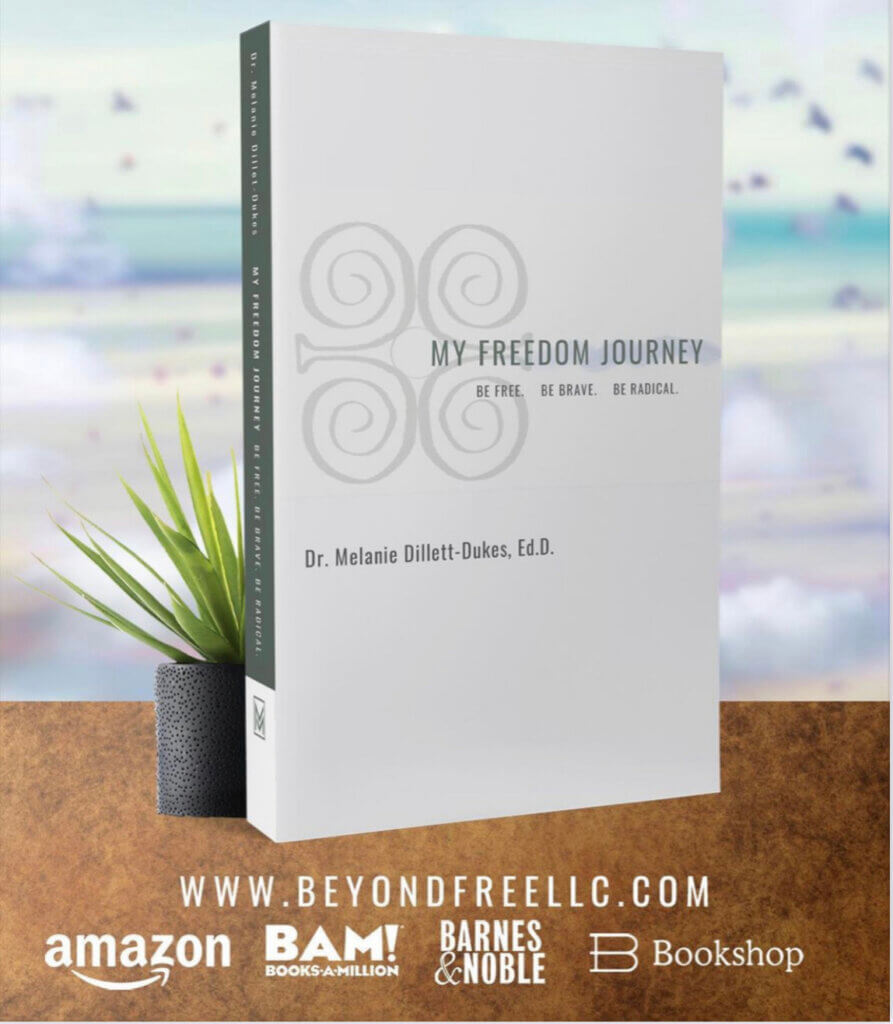
Weaver: Dr. Melanie Dillett-Dukes recently, authored a book titled, My Freedom Journey: Be Free. Be Brave. Be Radical. What does the title mean?
Dillett-Dukes: As a woman, mother, an educator, and activist in DEI work, my freedom journey was very important because it expresses the how we must go on to be free. Being brave and radical is when we’re free to think the way we want to think. We are brave enough to step into some of the spaces in which we can make change. Being radical is changing for complete transformation of people within their personal and professional lives to becoming free in their authentic self.
This book includes all the things that I’ve learned in 20 plus years of my personal and professional life, I wanted to put it in a book that’s easy to use with the main goal to be free in yourself.
Weaver: Tell us a little bit about why you wrote this book and particularly.
Dillett-Dukes: I spent 15 years abroad in different countries. My father worked for the UN and during that time, I experienced different cultures and perspectives. Coming back to the United States, as a 15-year-old and going into high school, then later into college, there were some things that I felt that the American public needed to make a change. Before we can really interact in a healthy manner, we need to tackle ourselves. Look at our stories a little bit deeper and see how our past intersects with our present and how that moves into our future. Going deeper into our personal spaces could be triggering, traumatic, and uplifting. We can’t just move in society thinking that everything’s positive. We need to make sure that we’re tackling tough issues. That can be very painful, but we do that so that we don’t repeat those cycles. We can be aware of how we’re interacting with people and how it could have a possible or negative impact on them as well. Tackling our personal self is essential in this work so that we’re moving towards change, and becoming more equitable and inclusive.
Weaver: What I’m hearing you say is that you need to do that personal exploration first, so that you could be much more effective in dealing with diverse individuals in challenging diversity situations.
Dillett-Dukes: It’s very important that you’re aware of yourself, your background and how it’s influenced you. You must understand that the intricacies, the details of how it possibly has impacted someone or yourself in a positive or negative manner. Getting deeper into your story and being aware of that is the first process.
In the book I have “Four Paths.” I always say that your freedom journey is not linear. You’re consistently learning and unlearning certain behaviors that have had an impact negative or positive impact on you. You’re going through those paths interchangeably, going back and forth.
Weaver: You indicated that you structured this book to almost be like a journey map. How do they start with your book?
Dillett-Dukes: I want to make sure I’m pushing people to be transparent and vulnerable so I put my vulnerability out there first, not showing all the details, but putting my vulnerability and transparency out there because it’s so important when you are doing this work that you’re remaining transparent. I start off with “Path One: Knowing Yourself”, which is getting to know who you are. “Path Two is Connecting Beyond Yourself” is understanding different perspectives. I’m not asking you to believe and absorb the values of people’s different perspectives, but it’s an awareness that there are different perspectives. Yours isn’t the right one all the time. “Path Three is self-reflection connecting deeper into yourself. A part of that self-reflection is accountability because with accountability, you’re able to really make the change. I used to self-reflect and look at myself all the time and think that I was making some changes, but then I had to have accountability partners say you’re not really doing much. The last one is “Connecting for Real Change” and is a part of communication. We understand that there’s different forms of communication to get out your ideas, your opinions, to different people.
Weaver: As we deal with anti CRT movement, are you also suggesting that before people can even engage in this kind of work they need to make sure they’re clear about their own freedom journey and what it takes for them to be free, brave and radical?
Dillett-Dukes: I want people to step into this space with an awareness. They’re stepping in with an awareness that the work needs to be done. One of the spaces in the book is talking about “Trigger Warning.” It’s an activity that I have in the book. When you’re doing this work, DEI work and anti-racist work, there are certain elements that may trigger you and you need to be aware of those things before entering those spaces. As a Black woman, I always must observe my spaces first because sometimes the spaces that I enter are not completely safe for me emotionally. I’ve not entered spaces where I’m necessarily physically feel unsafe, but emotionally and mentally unsafe. Trigger warning is starting to map out triggers. When we’re going back into our stories and our histories, it’s important to start labeling those.
Weaver: If we think about this whole anti-CRT from parents, does it also mean that they should pick up this book and really do their own exploration?
Dillett-Dukes: This is for all people who are trying to see another path or explore themselves. Having that visceral reaction to CRT and doing this work we know there’s something deeper that’s rooted in our society. Deeper stories that need to be told that America has not had the time to resolve. If people just take that time, we can move towards a little bit of change. I’m not saying this is a complete solution, but I am saying it’s a part of our critical thinking and social-emotional development.
Weaver: Why is that storytelling piece so important?
Dillett-Dukes: Telling your story opens you up to connect the dots and allows you to go deeper and reflect. Sometimes those experiences are both negative and positive. Some people don’t want to take the time to do it because it can hash up so many different emotions. When we talk about CRT, people feel a level of guilt in those past stories. That’s not what I’m asking you to do. I’m asking you to do is pull out those past stories. Figure out if there are any connections to see what needs to be done to change so that you can make more of a positive influence in your personal and professional life. We know those experiences run deep in our body. Traumas that can be deeply embedded show up in different ways and this book is just a way to be not reactionary, but to be proactive on your journey of life.
Weaver: How can an employee like myself, use this book to support identifying points of happiness for the people that are part of my team?
Dillett-Dukes: I created the book for individual, book club, or a cohort of people who are really trying to find their authentic self to live in that space of joy. When companies begin to really understand the importance of authenticity in the workplace and how it intersects in their personal life as well, then this is the book. You can go to just the “Freedom Dreaming” to go a little bit deeper into yourself.
When companies really invest in their employees and take that time, then this is the process to go through. This is where you can have coffee time or coffee chat, especially in our virtual world and do some of the activities. These are short activities that you could do to just get to know each other, to be more transparent with each other, and more vulnerable. Once we have that and empathy comes into place, that’s when we’re able to really connect with each other and realize we’re a lot more similar than what we thought. Those biases start to slowly break away because we’re connecting with each other. I wanted it to spark conversation to have that deep dialogue.
I want everyone to know that this is your journey to take. This is your time to process stories and experiences so that you can enact change in your personal and your professional life. This is your time to make ta positive impact.