
 Dana Brownlee author of the Unwritten Rules of Managing Up. She’s a thought leader around managing different personalities, navigating challenging situations in the workplace, and speaking truth to power. As a senior contributor for Forbes Careers and author of several LinkedIn learning courses, Dana’s business experience has also been featured by CNN, the Wall Street Journal, the Economist Working, Entrepreneur and other notable publications. This is an abbreviated version of the conversation on DEI vs Anti-Racist Work between Dr. Weaver and Dana Brownlee.
Weaver: What is the distinction between DEI and anti-racism work?
Brownlee: DEI is a broad umbrella. It’s about creating workplaces where everyone feels valued, so that umbrella needs to be broad. It needs to include differences we can see and can’t see. Anti-racism is a specialized area that needs specific intentional focus. The analogy I like to use sometimes is my husband is a family practice physician. He’s trained broadly. He’s trained to see you from the time you’re a baby until you die. But he often refers people to other doctors, because if you’ve really got a heart problem, you need to go to a cardiologist. If he suspects cancer, he’s sending you to an oncologist. Anti-racism is one area that oftentimes is underrepresented intentionally or unintentionally. That distinction is so important because many organizations have DEI organizations or leaders thinking they’re doing anti-racism work, but they’re not.
Weaver: What would be an example of anti-racist work?
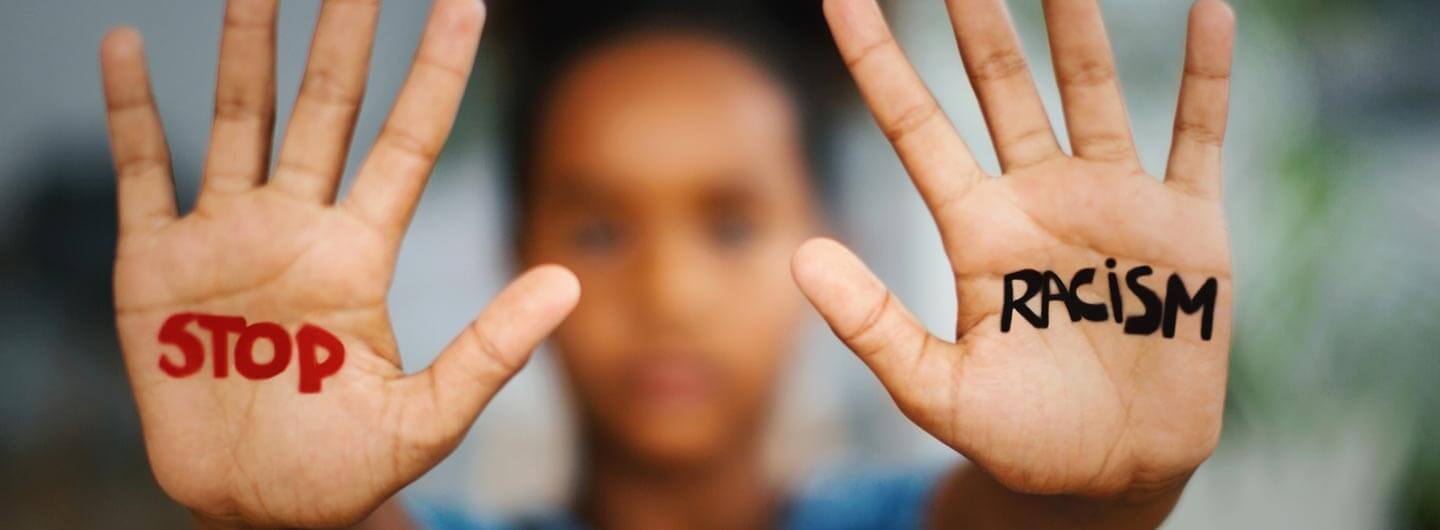
Brownlee: Anti-racism is actively working against racism. There’s ageism, ableism, and there’s areas that are important and require attention and focus, but people would rather talk about something that’s more comfortable. They’ll skip over the racism conversation because that feels like a more difficult conversation to have.
Weaver: Tell us a little more about your article “This is Why Corporate D.E.I. Tragically Fails Black Professionals.”
Brownlee: I think that DEI and anti-racism are not one. Anti-racism work is about understanding where racial disparities exist and doing the work to create equity to counter oppression. It’s asking why don’t we have any Black people on our board of directors? It’s approaching it as you would any other business problem. We have a customer base that’s diverse, but that diversity is not showing up in our leadership. Let’s do some root cause analysis to figure out how we got here and what we’re going to do to work against processes and policies that are antithetical to what we want to see in the workplace.
If we’re not ever uttering the words anti-racism, racism, oppression, racial apartheid then we’re probably not doing that work. You can just look at the language for a starting point.
When companies were onboard the PR wagon and BLM was hot. When we were in the heat of it, I was contacted by a law firm and they were gung ho. The term that a lot of them were using from Kendi’s work was, “It’s not enough to just be not racist, you have to be anti-racist.” I had conversations with them, and they selected one of my presentations on systemic racism and white privilege. They came back to me and said “we really want this, but can we not use the term privilege?” You want it, but you don’t want it. The fact that there are these disparities is not news or groundbreaking. Unfortunately, a lot of that was motivated by collective shame, media attention, and PR opportunity.
Weaver: What are the three ingredients to engage in productive conversations about racial equity and justice?
Brownlee: There are three fundamental ingredients that really are necessary if we want to handle these topics in a new, much more serious and intentional way.
The first one is racial literacy. After George Floyd’s murder, I dug in like a lot of other people. I wanted to lean into anti-racism. Over 18 months, I read about 80 books on anti-racism, history of oppression in this country because I needed to educate myself. I learned so much and it was transformative because the racial issues we’re dealing with today are so much more nuanced. We all must at least have the same understanding of our history. That’s why Nicole Hannah Jones work with the 1619 project is so transformative because it just speaks to the fact that we need to understand our history.
The second ingredient is humility. We need to have some level of humility and willingness to hear the other person so that we can be open to broadening our perspective.
The third ingredient is racial stamina. A lot of people have that reflex to shut down or that reflexive defensiveness. As soon as I say the word privilege or racial apartheid it can be triggering for a lot of people. But once you have racial literacy and humility you develop a stamina that allows you to continue to engage in a thoughtful, productive was in the conversation so that things don’t shut down.
Weaver: What evolved that makes the racial literacy really challenging?
Brownlee: If racial literacy wasn’t important, they wouldn’t be fighting against it. The fact that there’s so much fervor against it tells you there’s power in that. Because once people know the truth, understand the history, the background, and how we got here, then it’s almost like slaves not being allowed to read or write. When they were growing up, they knew there was power in knowing how to read and write. That’s why they were forbidden to do it because they knew there was power. The debate is about having a full, thorough, and accurate accounting of US history. You certainly teach kids about diseases, about the Holocaust, or nuclear war even though they may get upset. That’s just part of humanity and being of being an informed person.
Weaver: Have you received hostility or negative pushback because you’re talking about anti-racist in such a candid way?
Brownlee: I had a company for 20 years doing training but after George Floyd and Amy Cooper, which people forget happened the same day – she’s the woman in Central Park who weaponized her white womanhood, in that moment, in a split second to call the police on a Black man even though she was the person violating the law. I bring her up because it’s tragic. Amy Cooper was somebody’s boss working in the finance industry. We are likely to have an “Amy Cooper” as our neighbor, kid’s coach, a teacher, or a lawyer. That motivated me. We can make a difference in our little sphere. One of my favorite quotes by Margaret Mead is “never doubt that a small group of thoughtful, committed citizens can change the world.” So, I wrote in my Forbes careers column an article “Dear White People, 10 things you can do to advance anti-racism” and then “Dear White People, here are five uncomfortable truths your Black colleagues need you to know.”
I felt like I was a little bit of a vessel because I knew there were a lot of Black and brown people working in companies who wanted to say things but felt like they couldn’t. The feedback was overwhelmingly positive even though I have some trolls and death threats. There’s more opportunity to be bolder and I’m so glad that we continue to push on that because the change hasn’t been as significant and as durable and as lasting as I would’ve wanted it to be, but I think there has been change. I can even see it on LinkedIn. I’m on LinkedIn all the time, and the conversations change. The boldness changed; the definition of professionalism has really changed.
Weaver: What were the factors that drove that being positive?
Brownlee: Well, I think that companies were reaching out to me because they felt like they had a problem and they needed somebody to help unpack it. A lot of Black and brown people have been tired and wanted more attention on this problem. There were a lot of things that they’ve wanted to speak up about for so long.
Weaver: What’s one thing that a corporation, government agency or a non- profit can do to continue the dialogue around racism in their space?
Brownlee: I think that one of the most important things that I really like to recommend is look at the data. What are those numbers telling you? And if you see disparities then do the root cause analysis. Start with the problem and then ask why “five” times. That’s one of the techniques that I learned in industrial engineering to get to the root cause and fix that. I think that in terms of lasting, durable, significant change, we oftentimes need to change policies and processes. That’s the systemic nature of it. We need to treat it as a problem the same way we would treat other business problems to do the root cause analysis, figure out what’s causing the disparity, and then change that.
