
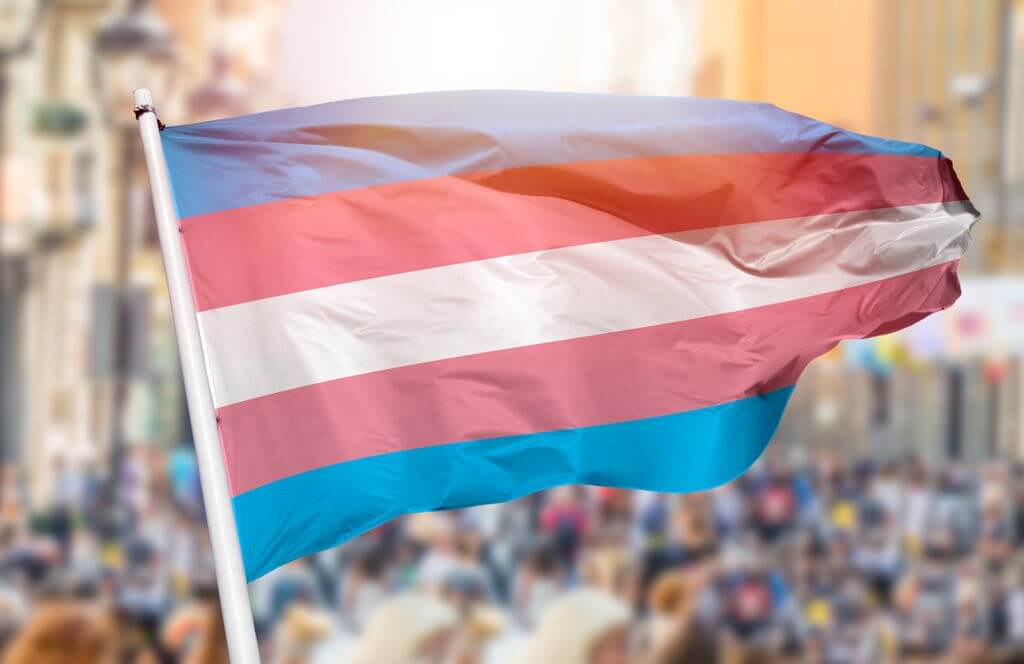
 Riki Wilchins is an American activist whose work has focused on the impact of gender norms. Wilchins’ work has been instrumental in bringing transgender rights into the mainstream LGBTQ movement and has helped bring awareness of the impact of gender norms to a wider audience. She has authored a few of the books–Read My Lips: Sexual Subversion & the End of Gender and GenderQueer: Voices From Beyond the Sexual Binary.
Weaver: The overturning of Roe versus Wade is painful. There’s also the pushback on the needs of the transgender population, especially for young people as local and state governments try to end access to medical assistance needed for people in transition and some even make it illegal for their parents to support their transgender children.
Wilchins: There is pushback on everything associated with gender. It’s under this rubric of gender ideology, which is a kind of made-up discriminatory term that includes hostility toward any kind of bodily rights to privacy among them—the right to love and have intimate relations with others. Transgender people’s access to gender-affirming care, and of course, a woman’s right to her own. It’s not just in the US–it seems to be a worldwide phenomenon against the idea of a more inclusive and level society that is no longer oriented around white, cisgender, straight males.
Weaver: Why did you choose this path in your life?
Wilchins: I don’t think I chose it. It chose me, I avoided it for years. I worked and lived in Greenwich Village, New York, which is the epicenter for liberal thinking in many ways. I was invited to protest at the Gay Pride Parade in New York City where they were still excluding transgender people and I kept going. I am a bifurcated individual. My family is half Christian and half Jewish, and we celebrated both Hanukkah and Christmas every year. There is a reassertion of white Christian nationalism going on in this country. To go back to the kind of nuclear family headed by white, straight Christian males, and it’s across the board. It sees its face in the rolling back of the Voting Rights Act that would keep people of color from voting. It’s in women’s right to abortion. It’s in the pushback on gay rights. It’s across the board to push back on the idea of a liberal society that offers an equal playing field to all people. If we don’t hang together, we shall assuredly all hang separately. They’re not coming for one of us. They’re coming for all of us. There’s a special pushback on trans rights, but I don’t imagine in any way that, that’s not a piece of the pushback on a woman’s right to abortion or on the rights of Black and brown people to vote in America. It’s all really is all the same.
Weaver: Why should the business community care about transgender rights?
Wilchins: Why should the business community care about a woman’s right to an abortion or if Black and brown employees can vote? All these things come together. It’s about our right to participate fully in a liberal society, which includes of course the workplace. There are always two answers to this question. The first answer is that corporations and the economy work better in a liberal society where everybody can give their best talents and can find work that’s appropriate to what they wanna do. The second answer is it’s good for business.
Weaver: Why are people fighting against medical care for children who are transitioning and parents who want to support their children?
Wilchins: This whole thing about protecting transgender kids is of a piece about that they can try to pretend that offering care to kids who are transgender is somehow abusing these kids. Even though we know that suicide rates among kids who are denied care is catastrophically high. The rates of regret among kids who do have care are exceedingly low, probably lower for any other kind of intervention medically. This is a purposeful attack to use hysteria to whip votes. The Utah governor tried to outlaw trans kids from playing in sports that matched their gender identity instead of their biology. They’re going after their children, which to me is a really sick way to fight any kind of political battle.
Weaver: What are some things an employer can do to demonstrate their commitment to the transgender population?
Wilchins: If you wanna attract top-flight talent, being a liberal organization is important. These are weather vanes for Gen X and Gen Z kids. They’re looking for liberal environments where everyone is accepted. That’s the kind of workplace they wanna work in, even if they’re straight and cis-gendered. If you wanna attract top-notch talent in a competitive workforce right now, you need to be an organization that prizes DEI as a core value, in every step, in every day. I think it’s a lot of little things, um, encouraging people to share their pronouns. I was very happy that you all asked me twice to make sure what my pronouns were before we got on. Those little things are noticed. Having gender-neutral bathrooms. Having equitable policies that support gay and transgender people in their rights in the workplace. These are ways that organizations can signal that they are leading edge. Organizations that are leading edge on issues like diversity, equity, and inclusion often are the most competitive and do the best kinds of thinking.
Weaver: Talk to us a little bit about gender pronouns.
Wilchins: There are lots of people, I’m one of them, where their pronouns are not their gender identity. Their sense of themselves is masculine and or feminine. Male or female is not always apparent or doesn’t always match the way you might see them. I think it’s a sign of respect just to ask someone, what their preferred pronouns are or better yet, offer your own: “My name is Bob, and my pronouns are he/him.” Anyone who’s listening will say this is a queer-inclusive workplace, they know enough to offer their pronouns. DEI looks like a journey, not a destination. They’re always new things coming, and we have to keep upping our game, and I think this is part of the new best practice. DEI is something we’re all trying to master complex stuff together. We not only need to try hard, but we need to understand that we’re not perfect.
There’s a difference between an honest mistake and a mistake that’s a microaggression. Any sentence that’s framed as you’re so blank for a blank or I never would’ve guessed you were blank is almost automatically a microaggression. We need to stick a pin in that and come back to that and say, “Can we impact that a little?” Some of us are gonna make mistakes. In my DEI training, I try to emphasize to corporations we don’t want “call out culture”. We want “call in culture” and invite people into the conversation. People don’t get better at DEI when we call them names and make them walk on eggshells. The idea is to call people in because all of us have shortcomings in some areas. I’m never gonna understand what it’s like to be undocumented or know what it’s like to grow up as a person of color in America. I’m always gonna be on a journey and fall short, and that’s okay. I try to emphasize to folks that it’s about greeting people with acceptance and love where they are and then helping them to get better. Microaggressions are usually about rendering a judgment and it usually comes from a place of feeling superior to someone else. Honest mistakes are part of the DEI journey. We are finding ways to be a more inclusive society. Whether you’re a person of color, undocumented, transgender, genderqueer, disabled, or whatever that looks like we are striving to be a more inclusive society. When things change, you learn new stuff, which is very uncomfortable.
Weaver: You use a lot of humor. What role does humor play in allowing more people to feel like they can come in and be a part of the conversation?
Wilchins: I think people learn better when they’re relaxed and laughter helps people relax. It also brings us together. I make fun of myself cuz if the DEI instructor doesn’t get it right all the time then it must be okay that they don’t get it right all the time. As Professor Kimberly Crenshaw told us, these are intersectional problems. It’s not just race, class, disability, sexual orientation, and gender. It’s all of them. It’s complicated stuff. I use humor a lot, but I think it’s the best way to teach people.
